Place names in Meerbusch

One of the confusing things for newcomers to Meerbusch is the sheer number of place names used for different parts of the town. Meerbusch was only officially recognised as a town on 20. May 1976. Prior to that it consisted of a loose collection of eight formerly independent villages: Büderich, Osterath, Lank-Latum, Ossum-Bösinghoven, Strümp, Langst-Kierst, Nierst and Ilverich, which went by the collective title ‘Waldgebiet Meerbusch’ – the forested region of Meerbusch.
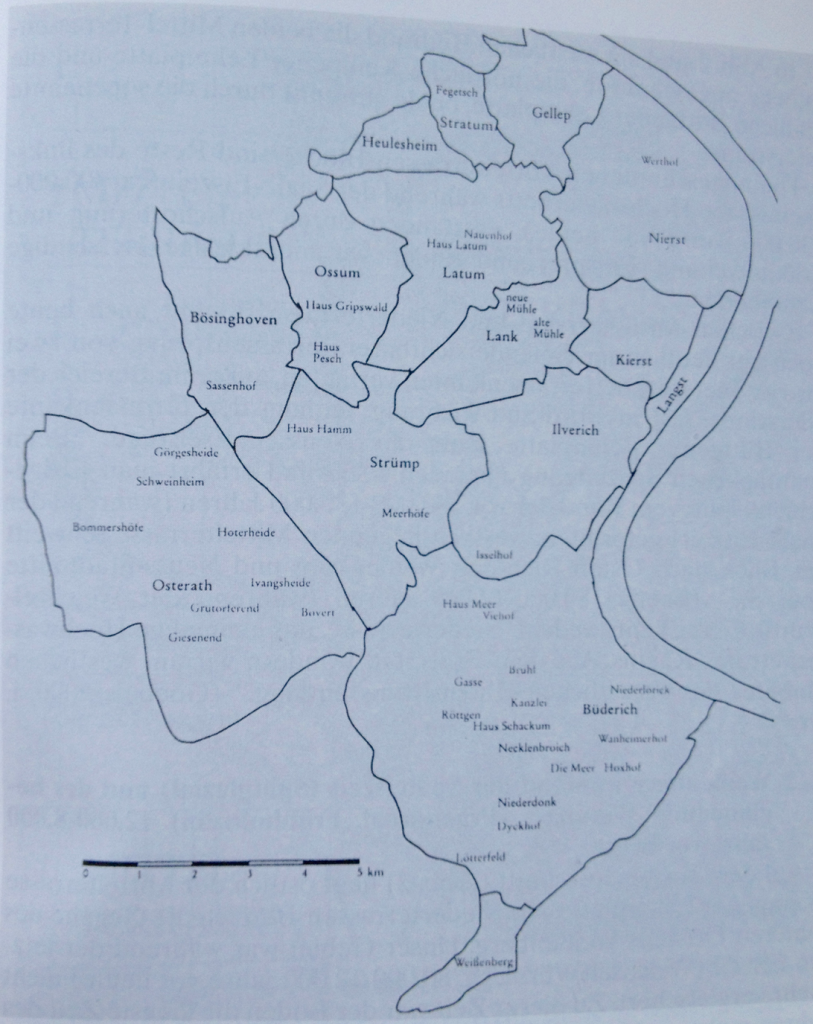
The area collectively known as Meerbusch prior to 1910

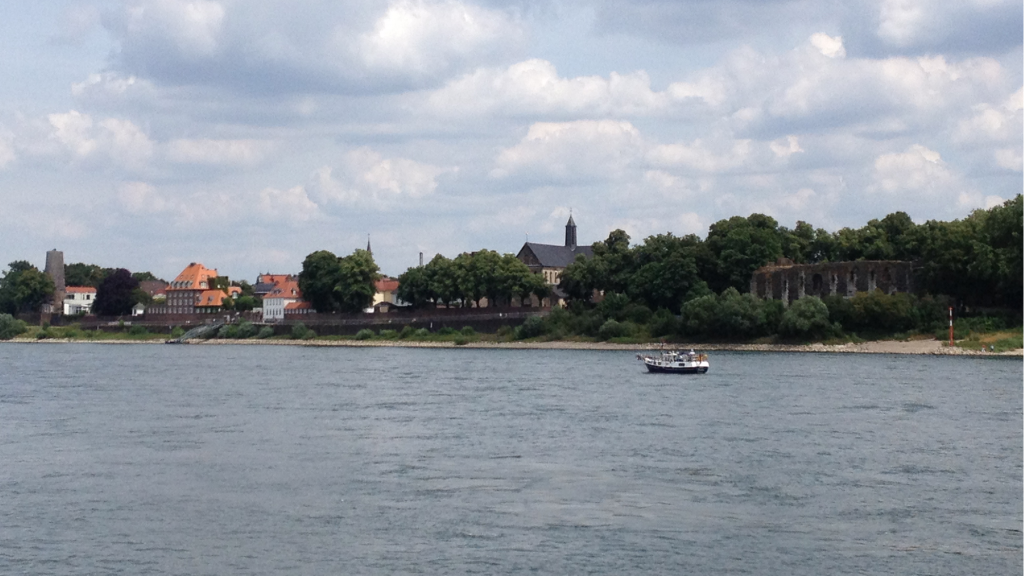
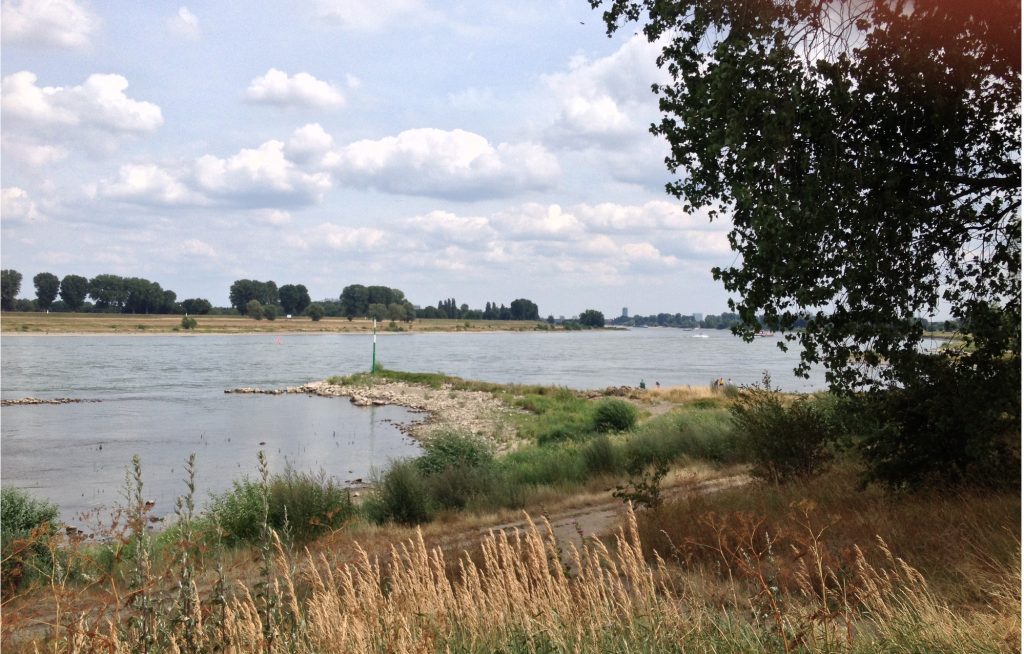
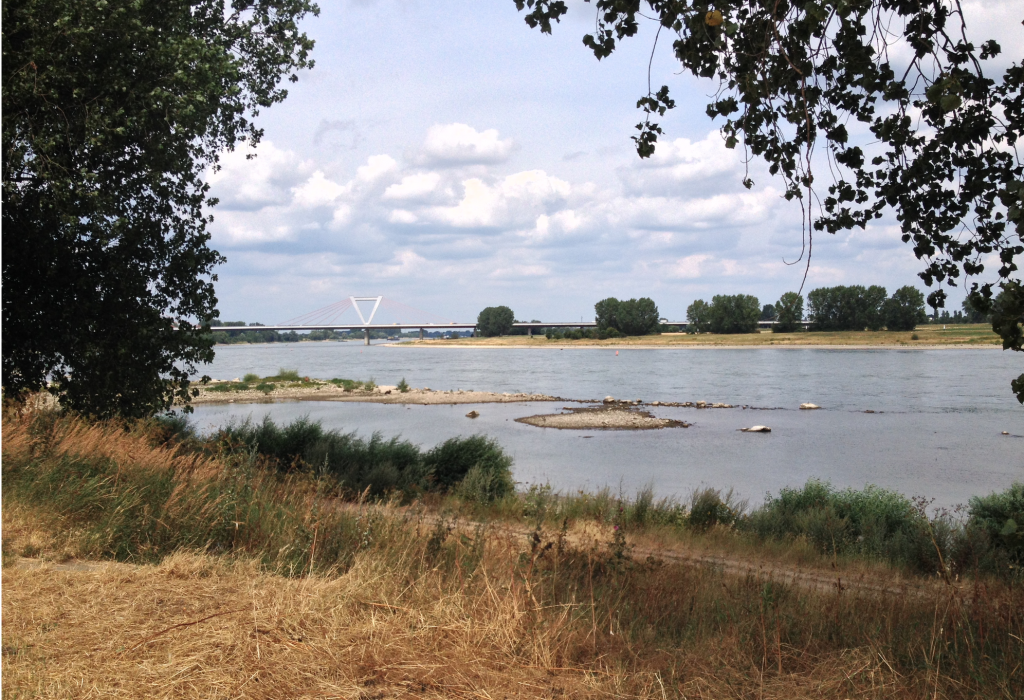
The Rhine at Meerbusch

In the current heatwave the only hint of a cool breeze is to be found down by the Rhine. The best place to catch it is the middle of the river from a boat.

View from the ferry at Kierst across to Kaiserswerth

Unfortunately the ferry between Meerbusch and Kasierswerth is not operating at the moment as it is ‘moonlighting’ for a couple of weeks as a pleasure boat at the fair in Oberkassel. We are obliged to cool off as best we can on the banks.

The low level of the Rhine means wide beaches have appeared along parts of the river, especially around Meerbusch. The locals are making the most of this, holding barbecues and parties there every evening.

Unusual lawnmowers at Schloss Pesch?

Back in the days before the park was remodelled, it was quite common to see deer grazing in the grounds, especially in the early mornings. Of course as the park backs onto the Herrenbusch – you’d expect that.
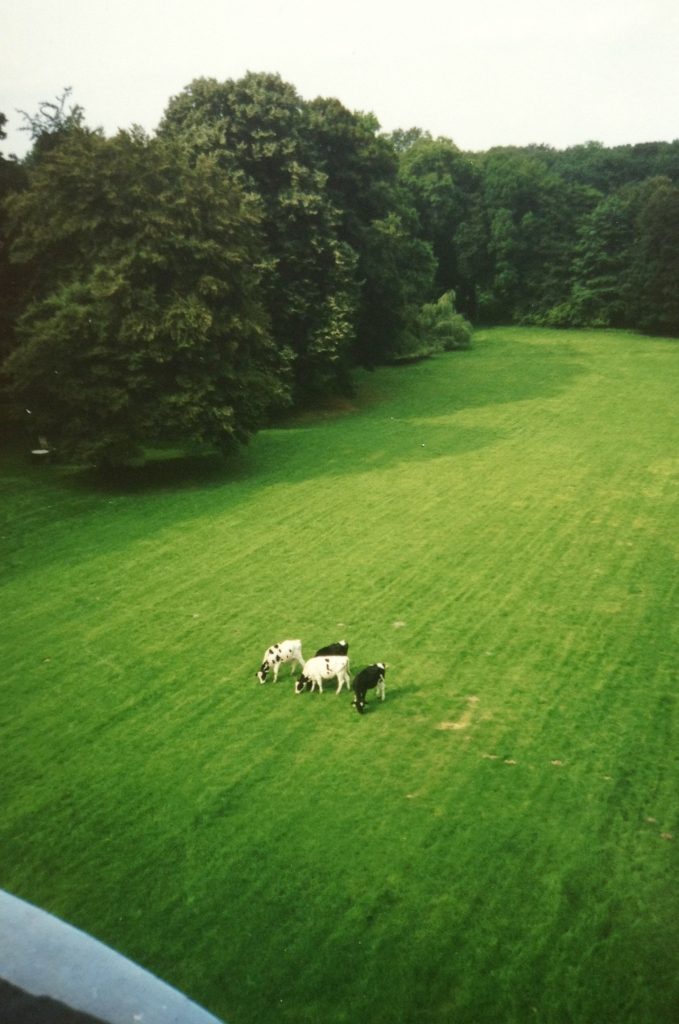
What fewer people know is that it was also not uncommon to find cows grazing on what would once have been the lawn.

Good morning!

Not that the residents actually kept cows. Behind the row of trees at the back of this image there is a field before you reach the woods. The cows which inhabited that field were quite adventurous and enjoyed making occasional excursions through the hedge to roam the grounds of Schloss Pesch. Back then the residents were quite OK with the cows.
Once the park was tidied up and the lawns relaid, the cows were increasingly discouraged from using them as a pasture. It took a while for the cows to take that message on board though.

This new grass tastes amazing!

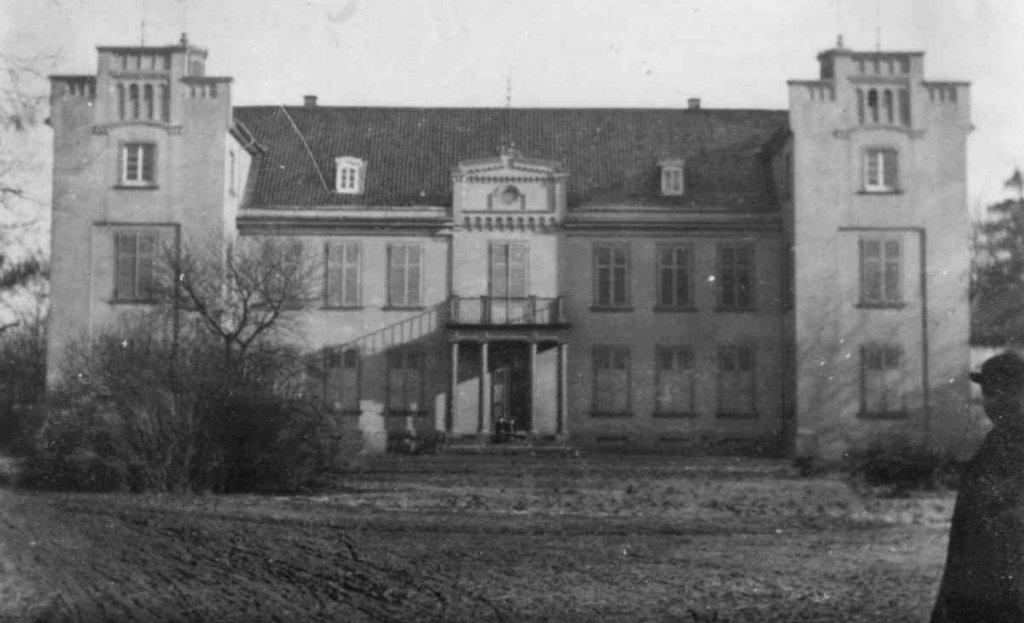
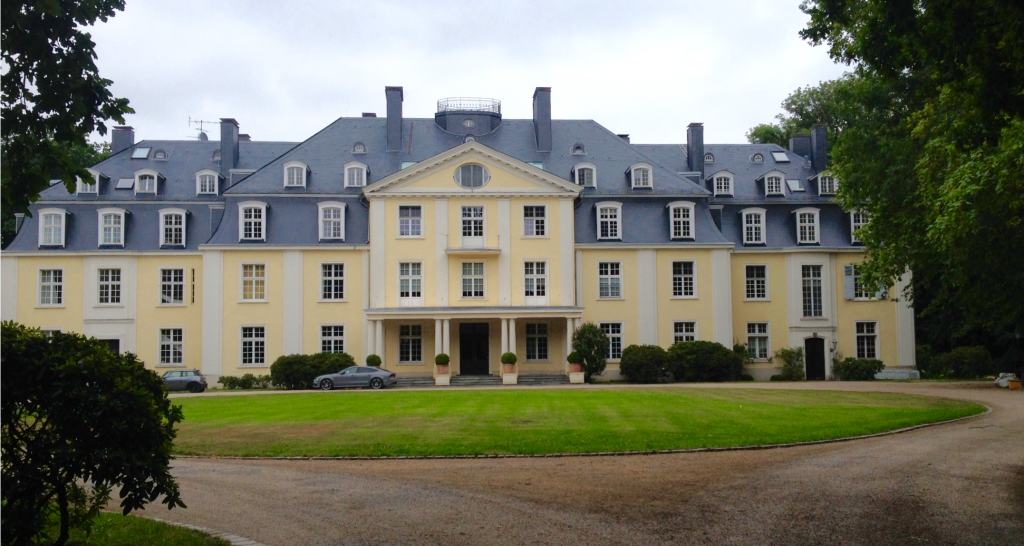
Schloß Pesch pre- and post-renovation

Much has changed at Schloß Pesch since the 1970s. Back then, the schloss was abandoned and in a state of disrepair with peeling paint, cracked plaster, its grounds wild and overgrown. Since then it has been extensively renovated and turned into upmarket apartments. The park has been tamed and the ghosts are firmly discouraged. I found these two videos online which capture the transformation which has taken place.

The renovation of the chapel at Schloss Pesch

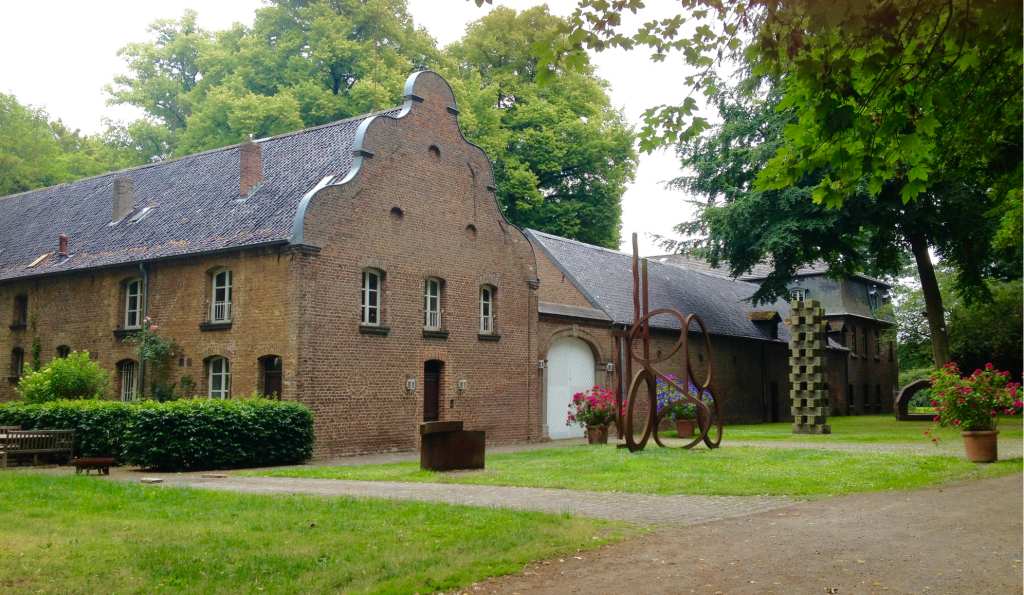
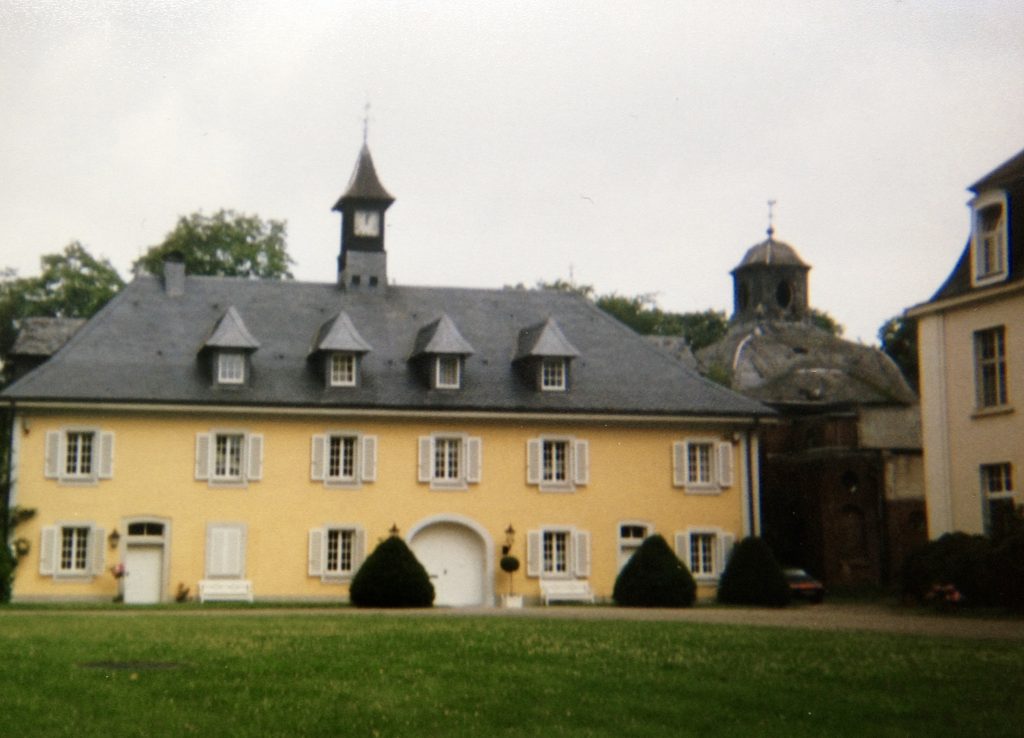
A number of people have contacted me with questions about the chapel at Schloß Pesch and in particular about what it looked like before the renovation. For those who have not visited Schloß Pesch, the former chapel is situated to the left of the schloss as you approach it, slightly set back from the Rentei (staff quarters) which is the building with the clock tower.

To get a better impression of how the old chapel used to look and what changes have been made to it, there is an excellent collection of photographs on the architect’s website. Well worth a browse.

Pre-renovation view of the Rentei at Schloss Pesch with the ruined chapel in the background

Old stories about Meerbusch

One of the characters in The Devil’s Missal is a collector of stories. He travels around the various villages of Meerbusch talking to residents, gathering their tales of times past and present, trawling through old photographs, letters and diaries.

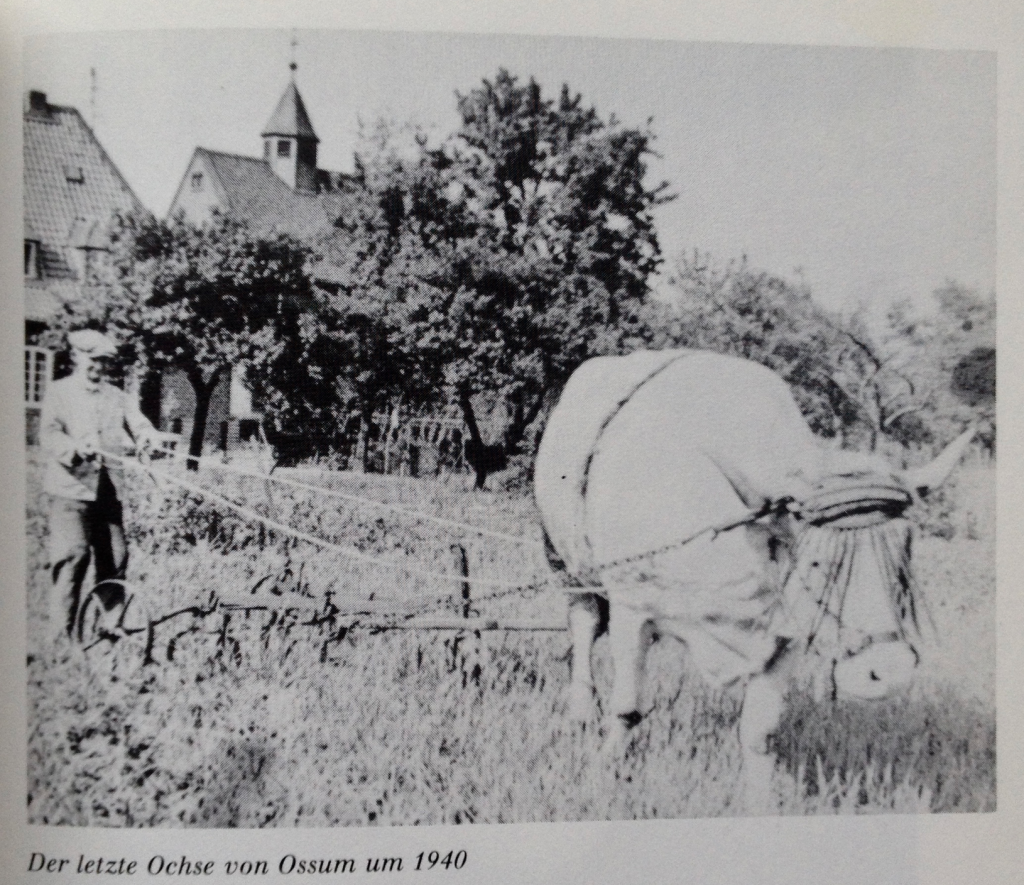
As a rural community, many of the anecdotes will have been about life on the land, which has seen great changes in the past century. It seems strange to think that only eighty years ago there were still farmers ploughing with oxen or horses in the area.

The Teloy Mühle in Lank

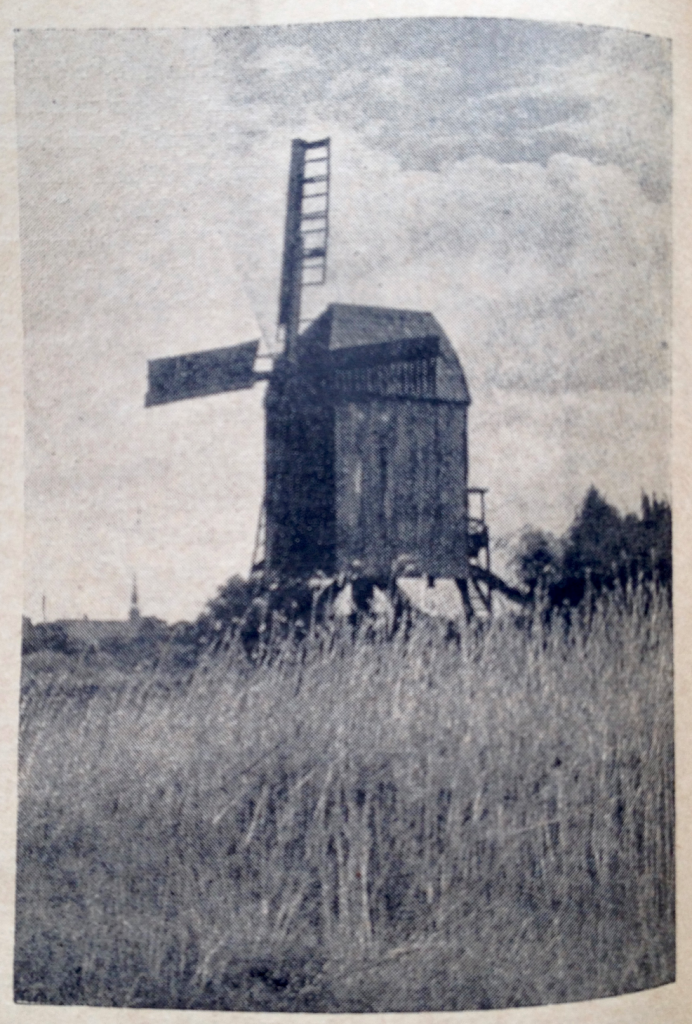
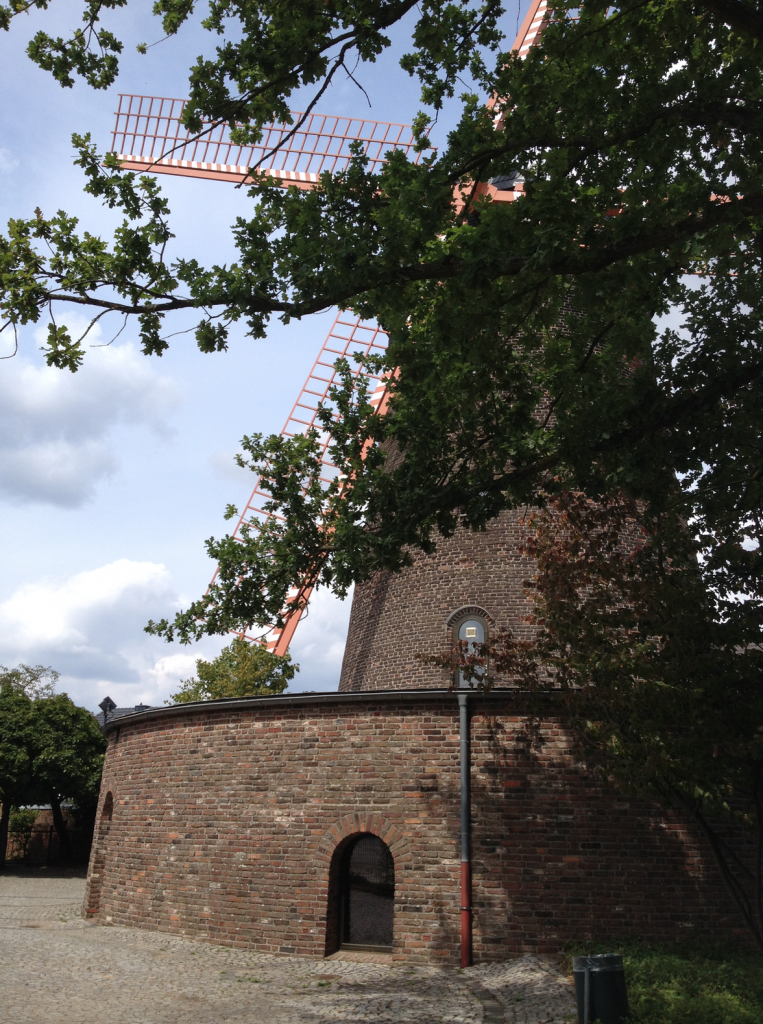
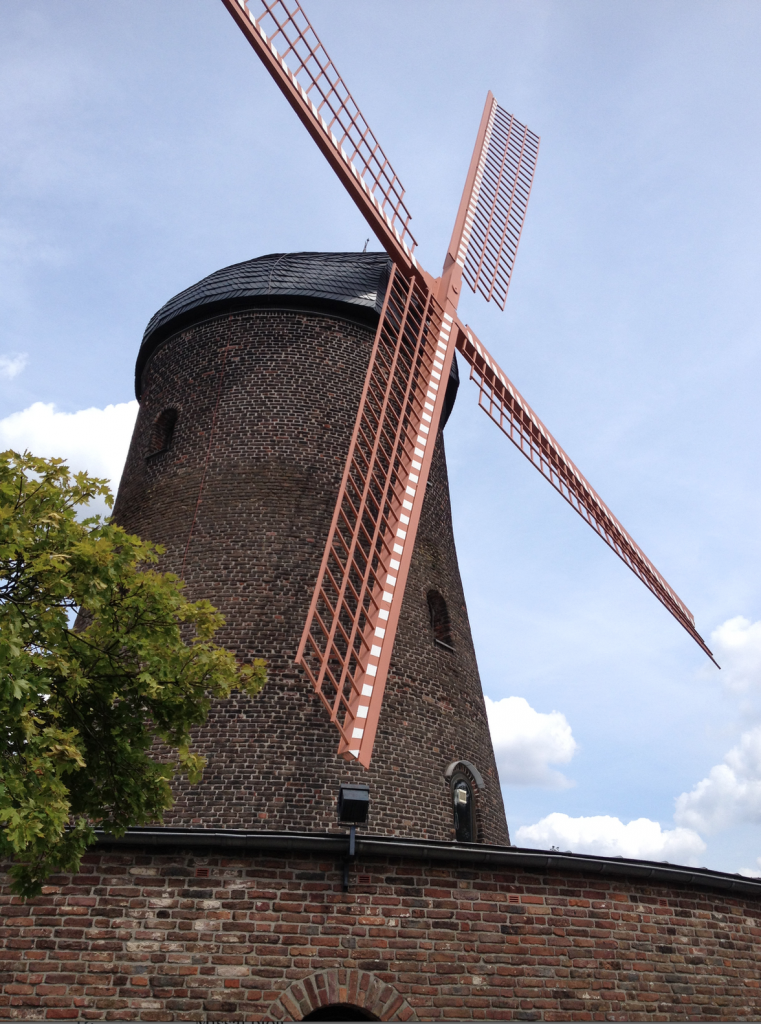
When I picked the Teloy windmill as the setting for a particular scene in The Devil’s Missal, I was particularly looking for somewhere which looks rock solid – a safe port in a storm, so to speak.
I was in Lank today and thought I’d drive past the windmill to take a photo for this blog, but then the same thing happened as always seems to happen to me when I go there. I couldn’t find the windmill. I know, I know, how can you lose something the size of a windmill? In my defence, it is hidden by trees and other buildings until almost the point where you’re walking into it. Anyway, the elusive mill couldn’t evade me in the end. Here are a couple of snaps to prove it.